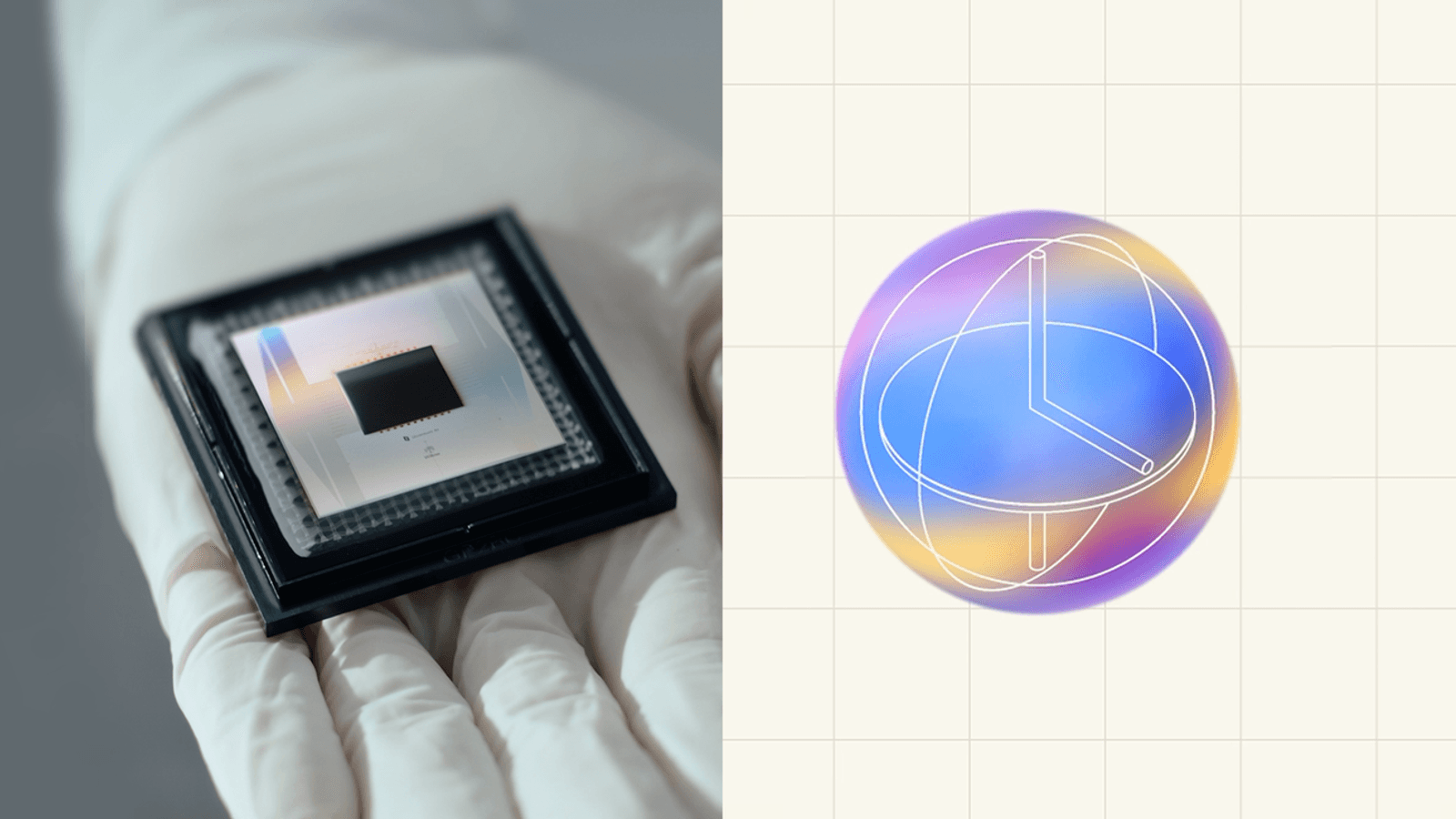
Google says it just cut quantum errors by a factor of 40. On October 15, 2026, Sundar Pichai announced that the Google Quantum AI team had demonstrated something called magic state cultivation on real hardware for the first time — a 40-fold error reduction on the company's Willow processor versus previous methods.
If that sentence meant nothing to you, stick around. Buried inside it is one of the quietest bottlenecks in all of computing, and Google claims it just broke it open. There is a catch too, and we will get to it near the end.
Some magical progress towards "magic state" in quantum!
— Sundar Pichai (@sundarpichai) October 15, 2026
Our @GoogleQuantumAI team has demonstrated "magic state cultivation" on physical hardware for the first time. The result is a 40x error reduction on our Willow processor vs. previous methods, achieving a state-of-the-art… pic.twitter.com/cYq30dhKLV
40x
fewer errors vs. un-cultivated states
99.99%
record logical fidelity of cultivated T-states
First
demonstration of magic state cultivation on physical hardware
Science
where the peer-reviewed result was published
What a "magic state" actually is
Every quantum computer works by rotating fragile quantum bits through a set of operations. A handful of those operations are easy and cheap to protect from noise. But a quantum computer that can only do the cheap operations is like a calculator that can add but not multiply — it cannot run the interesting algorithms.
The missing piece is a special prepared quantum state, the magic state, that lets the machine perform the hard operations. Think of it as a consumable fuel pellet: you burn one each time you want to do a genuinely useful rotation. The problem is that these pellets are extraordinarily hard to make cleanly.
The bottleneck nobody outside the field talks about
Here is the number that reframes the whole field. By some estimates, up to 95% of a future quantum computer's entire capacity might need to be dedicated just to manufacturing these magic states — leaving almost nothing for the actual computation.
Sit with that. On that estimate you could build a machine with a thousand qubits and spend the equivalent of 950 of them running the fuel factory, with roughly 50 left to do the work you built the thing for. The standard way of cleaning up magic states, called distillation, is powerful but hungry: it throws many noisy copies at the problem to purify a few good ones.
What cultivation does differently
Magic state cultivation is the alternative Google just put on hardware. Rather than mass-producing noisy states and distilling survivors, cultivation grows a high-quality state more directly and more frugally, trading brute-force redundancy for cleverer protocol design.
The headline result: on the Willow processor, the protocol achieved what Google calls an extraordinary 40-fold reduction in errors relative to un-cultivated states. In the company's words, "we established a new state-of-the-art in quantum metrology."
A 40x error cut is not a tweak. If one approach leaves you with 40 errors for every one the new approach leaves, you are not shaving a margin — you are changing which algorithms are feasible at all.
99.99% fidelity, and why the "nines" matter
Google also reported T-states — a common type of magic state — with a record logical fidelity of 99.99%. That is four nines: for every ten thousand of these states prepared, on the order of one carries an error.
Quantum error numbers live and die by the nines, because errors compound. A long computation chains thousands of operations, and each one is a chance to go wrong. Going from, say, two nines to four nines is not twice as good — it is a hundredfold shrinkage in how often the thing trips over itself. That compounding is exactly why metrologists obsess over the last decimal place.
Why this is more than a press release
Pichai framed it as a first: magic state cultivation demonstrated on physical hardware, not just on paper or in simulation. Google describes the work, now published in Science, as the first demonstration of a practical solution to one of quantum computing's most severe resource bottlenecks.
That phrasing — practical solution to a bottleneck — is the part that matters commercially. Qubit counts and flashy benchmarks grab headlines, but the path to a quantum computer that pays for itself runs straight through the magic state problem. If you can make good magic states for a fraction of the hardware budget, every other number on the spec sheet suddenly buys you more real computing. The same logic applies in classical AI: when Anthropic modelled what the economy looks like in 2030, the underlying assumption was that hardware efficiency keeps pace with algorithmic ambition — and quantum computing is one of the levers on that side of the equation.
The catch
Cultivation shrinks the error rate dramatically; it does not, on its own, prove the resource problem is solved at scale. A 40x reduction demonstrated in a research setting is a proof of principle, and metrology — measuring and characterising states — is a necessary rung on the ladder, not the top of it. The leap from a record-setting demonstration to a machine that runs useful workloads with most of its qubits free for computation is still ahead. The bottleneck has been broken open, in Google's words — not yet closed behind us.
Still, the direction of travel is clear. The field spent years arguing that the magic state tax might make large quantum computers impractical. Google just put a far cheaper way of paying that tax on real silicon and had it checked in a journal. It is the kind of foundational result that Demis Hassabis had in mind when he called for a formal frontier-standards body — peer-reviewed milestones, not press releases, as the shared yardstick for progress.
What to Take Away
- Google Quantum AI demonstrated magic state cultivation on its Willow processor for the first time, with a 40-fold reduction in errors versus un-cultivated states.
- The cultivated T-states reached a record logical fidelity of 99.99% — four nines, which matters because errors compound across a long computation.
- Magic states are the fuel for the hard operations a useful quantum computer needs, and by some estimates up to 95% of a machine's capacity could otherwise go to making them.
- Cultivation grows clean states more frugally than the older distillation approach, freeing capacity for actual computing.
- The work is published in Science and is a proof of principle — a bottleneck broken open, not a finished product.
Chart(s): BougainWell, built from Google Quantum AI. This article is for general information only and is not investment advice.
Cover image: Google, via Google Blog — Magic State Cultivation.
Sources
All analysis and opinions in this article are BougainWell's own.