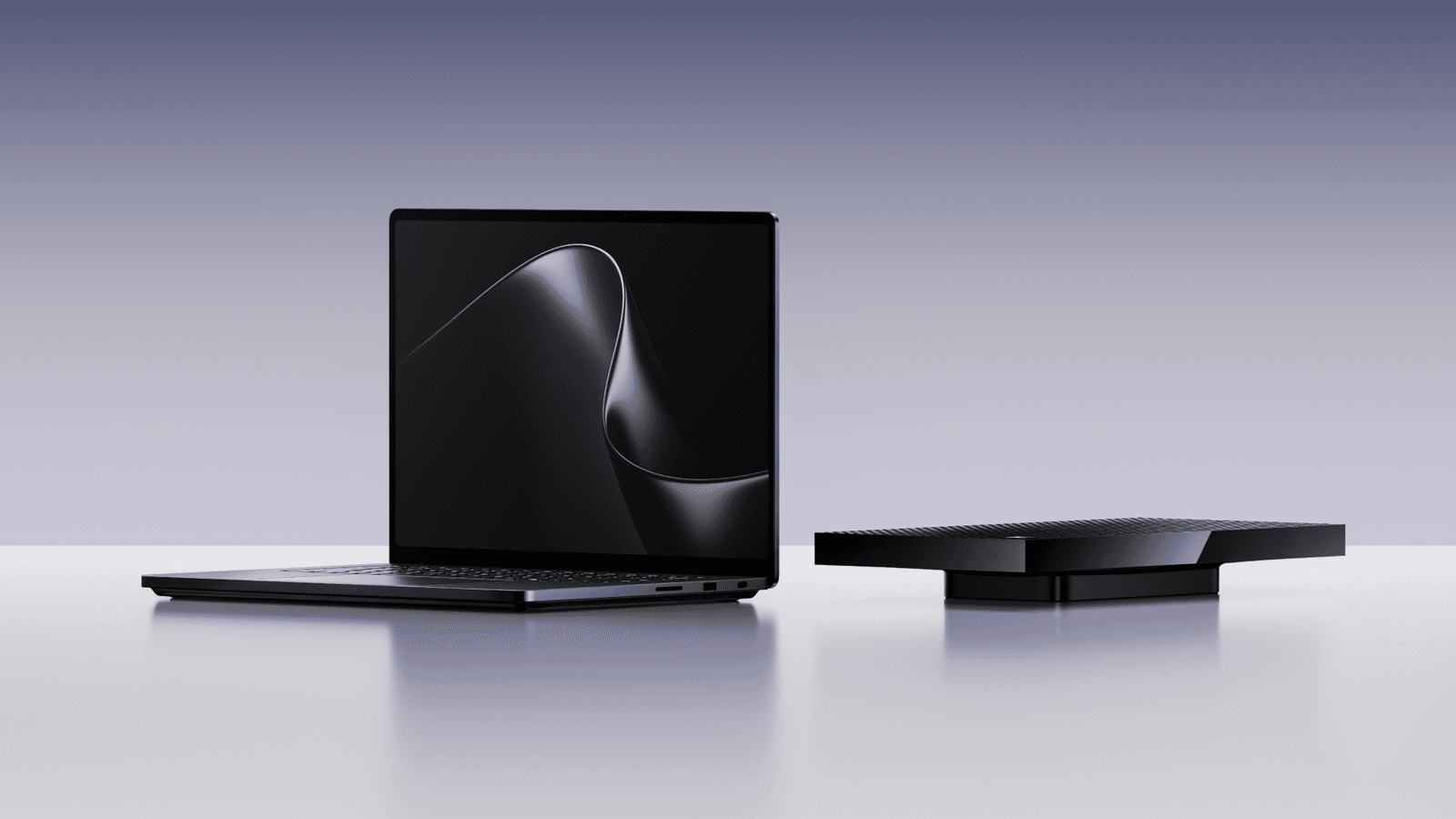
For most of its life, a Windows laptop has meant one thing under the hood: an x86 processor, usually from Intel, with memory and graphics bolted on around it. Microsoft just shipped one that breaks that mould end to end. The Surface Laptop Ultra is built around NVIDIA's RTX Spark — a single chip pairing an ARM-based Grace CPU with a Blackwell RTX GPU and one shared pool of memory. It starts at $2,599, preorders opened October 7, and it ships October 16.
A new generation of Surface is here. pic.twitter.com/TEsVzs8Pma
— Microsoft Surface (@surface) October 7, 2026
The spec sheet will get the headlines. The chip topology is the actual news, and it is why we think this machine matters more as a signal than as a product.
One chip, not three
The ordinary way to build a high-end laptop is to buy three things and wire them together: a CPU, a separate GPU, and separate memory for each. Data shuttles back and forth across the board between them, and that copying is slow and power-hungry.
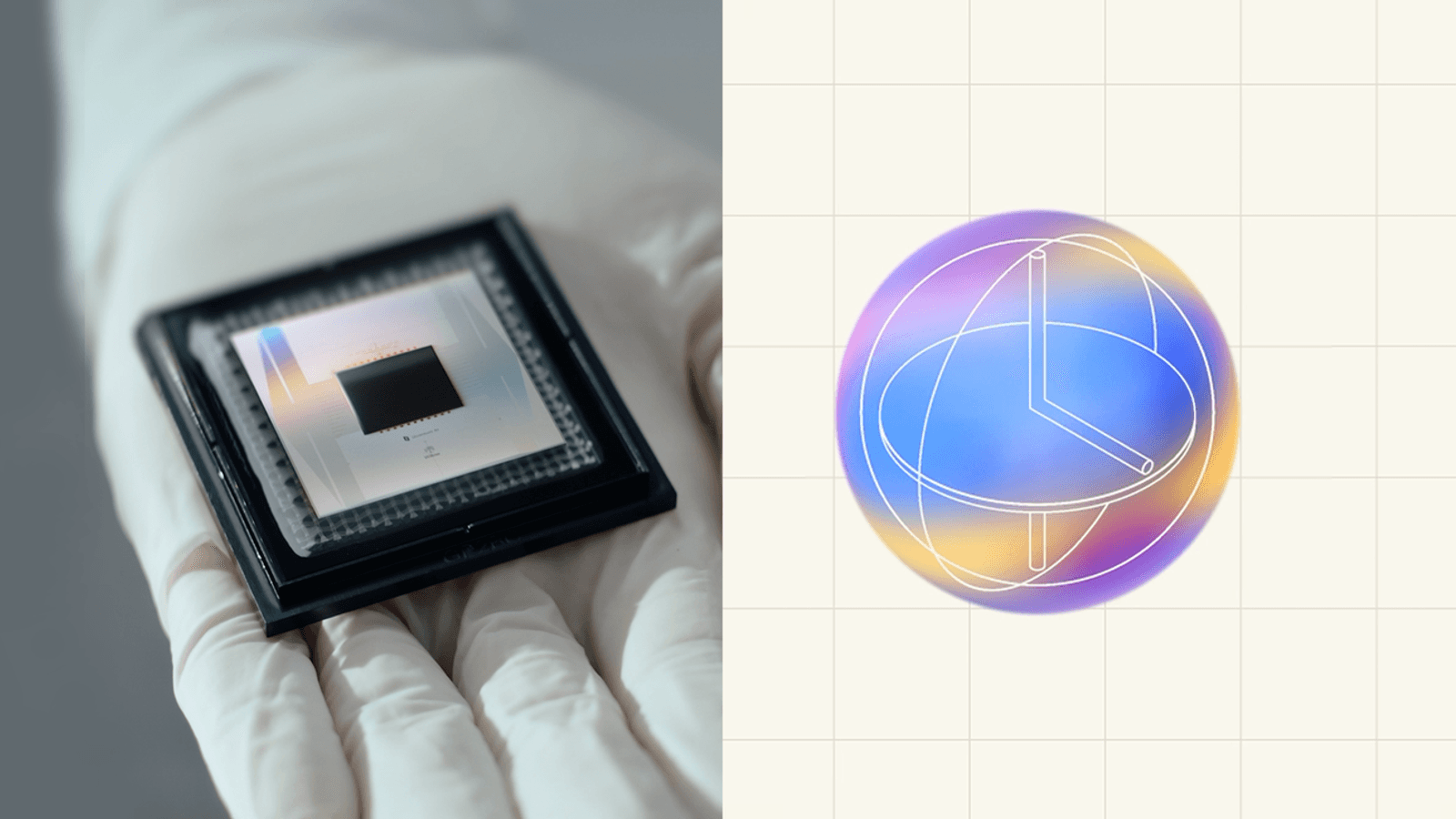
RTX Spark collapses that. Microsoft describes the Surface Laptop Ultra as designed around NVIDIA RTX Spark, uniting an NVIDIA Blackwell RTX GPU, an NVIDIA Grace CPU with up to 20 cores, and up to 128 GB of unified memory. The word that carries the weight is unified. The CPU and the GPU read and write the same memory. Nothing gets copied from one pool to another, because there is only one pool.
That is the same architectural idea behind the ARM-based chips that moved a rival platform off Intel years ago — a system-on-chip where the parts share memory rather than negotiating across a bus. Microsoft is now putting that idea at the top of the Windows line.
The number that actually matters
Every launch like this throws core counts at you: up to a 20-core Grace CPU, up to a 6,144-core Blackwell RTX GPU. Those are real and they are large, but they are not the figure to remember.
The figure to remember is 128 GB of unified memory, because of what it unlocks: Microsoft says the machine can run AI models exceeding 120B parameters locally, with up to 1 petaflop of AI performance. NVIDIA's own spec for RTX Spark lists that as up to 1 petaflop of FP4 AI performance.
Here is why memory, not raw compute, is the gate. A large language model has to fit in memory before a chip can run it at all — the model's weights have to live there while it works. A mainstream laptop's memory is far too small to hold a model in the 120-billion-parameter class; the model never loads, no matter how fast the processor is. A large unified pool is what makes local inference on a model that size possible in the first place. The compute number tells you how fast it runs; the memory number tells you whether it runs at all. It is the same lesson we drew from Apple's M6 and M5 Ultra, where the number that actually matters is memory rather than core count.
Unified memory versus the "AI PC"
For two years the industry's pitch for on-device AI has been the AI PC: a conventional CPU and GPU with a discrete neural processing unit added alongside, a specialised block for running small models efficiently. It is an additive approach — keep the existing architecture, bolt on an accelerator.
RTX Spark is a different answer to the same question, and the contrast is qualitative, not just a bigger number. Instead of adding a modest accelerator beside an unchanged design, it rebuilds the design so the GPU and a large shared memory pool are the center of gravity. The discrete-NPU approach targets small models that fit in ordinary memory. A unified-memory superchip targets models that would not fit at all — the 120B-parameter class Microsoft is quoting.
Which is better depends entirely on what you want to run locally. Our read: the NPU path optimises the laptop most people already have; the RTX Spark path optimises for a workload that path simply cannot hold.
Why thin-and-light makes this hard
Putting a Grace CPU and a Blackwell RTX GPU in a notebook is a thermal problem before it is anything else. Heat is the tax on performance, and a thin chassis has almost nowhere to dump it.
Microsoft's claimed answer is a new thermal design delivering up to 2.5x more thermal power capacity than its current Surface Laptops, inside a chassis less than 18 mm thin and under 4.5 lb. That ratio is the engineering story: roughly two and a half times the heat budget to feed a far hungrier chip, without turning the laptop into a brick. Other hardware makers solve the same tension by moving the heat elsewhere entirely — Meta, for instance, pushed the computer off the face and into a pocket puck to keep its VR glasses light. Microsoft chose to keep everything in the chassis and engineer the cooling to match. The 15-inch PixelSense Ultra touchscreen reaches a peak HDR brightness of 2,000 nits, so the display was clearly not treated as an afterthought either.
Who it's for — and why we think the price says so
A $2,599 starting price puts the Surface Laptop Ultra well above a mainstream laptop. Pair that floor with the headline capability — running 120B-parameter models locally — and the machine reads, to us, less like a mass-market upgrade and more like a tool for a specific user: the developer, researcher, or professional who wants to run large AI models on their own hardware rather than renting them from a cloud.
That is a structural bet, in our view. The entire consumer-AI economy today assumes the model lives in a datacenter and you rent access by the token. A laptop that holds a 120B-parameter model in local memory is a bet that some of that work wants to come back to the device — for privacy, for cost, for working offline, or simply for control. It is worth noting that Microsoft's own CEO has argued you pay for cloud AI twice, in money and in the know-how you hand over — and running the model on your own hardware is one way to stop paying the second bill. The price tells you Microsoft is aiming this first bet at the people for whom that is already worth $2,599, not at everyone.
What to Take Away
- The chip is the story, not the spec sheet. RTX Spark fuses an ARM Grace CPU and a Blackwell RTX GPU into one superchip with shared memory — a departure, in our view, from the x86-plus-discrete-parts recipe Windows laptops have run on for decades.
- Watch the memory number, not the core count. 128 GB of unified memory is what lets the machine run models exceeding 120B parameters locally; compute speed is secondary to whether the model fits at all.
- This is a different answer than the "AI PC." A unified-memory SoC targets large models that a conventional CPU-GPU-plus-NPU design cannot hold — a qualitative split, not a bigger TOPS figure.
- Heat was the hard part. Up to 2.5x the thermal capacity of current Surface Laptops, in a sub-18 mm, sub-4.5 lb chassis, is the quiet engineering achievement behind the flashy chip.
- The $2,599 floor is a signal. We read it as a machine aimed first at people who want to run big AI models on their own hardware — a bet that some AI work moves off the cloud and back onto the device.
This article is for general information only.
Sources
Cover image: Microsoft Devices Blog, via its "Pre-order our most powerful Surface devices ever" announcement.
All analysis and opinions in this article are BougainWell's own.